Sitka Herring Spawn and Spring Whale Watching
Sitka Herring Spawn: When Sitka’s Wildlife Comes Alive
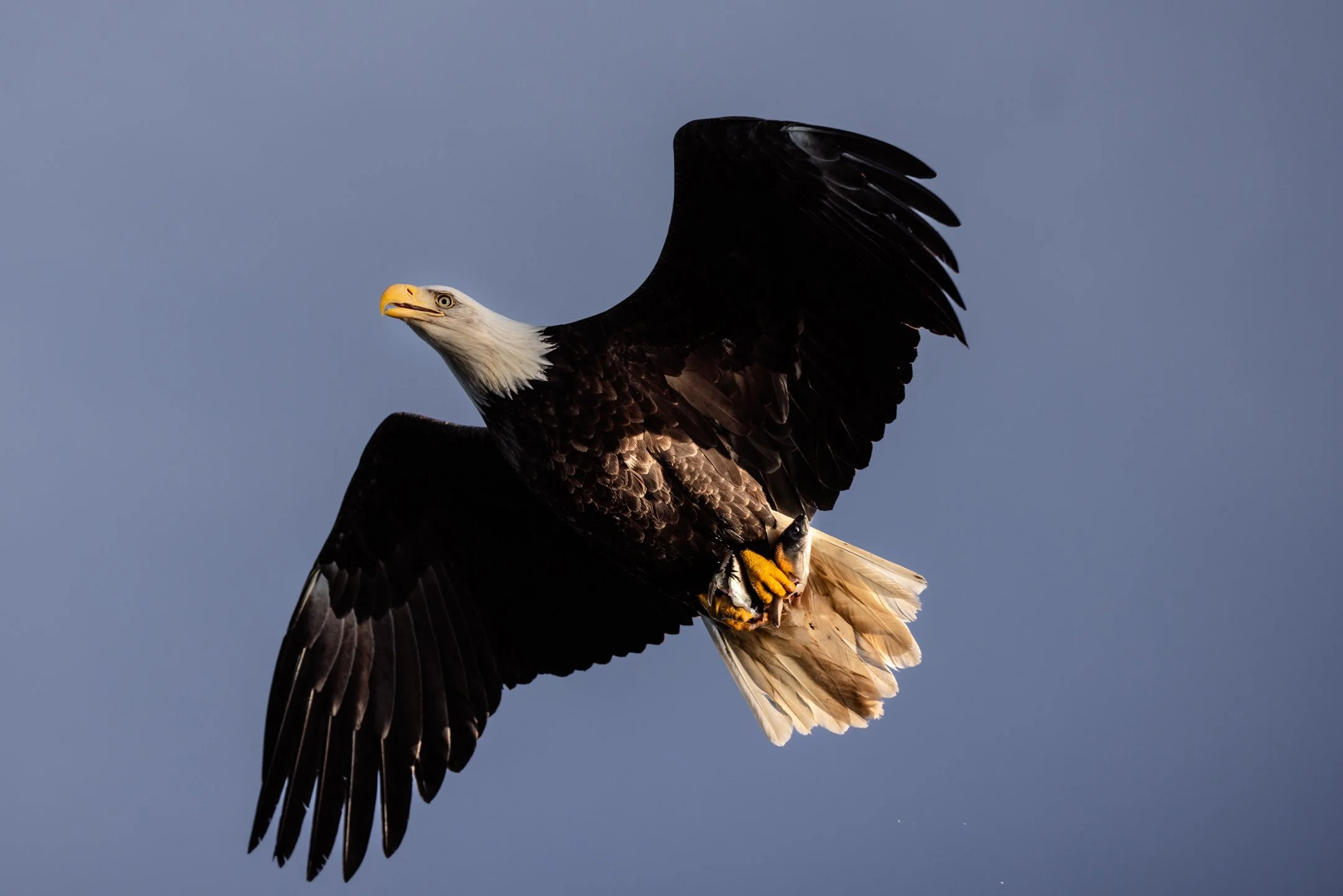
Bald Eagle with Herring in Hand (or Talons) by Caitlin Blaisdell
One of the most remarkable times for whale watching in Sitka begins in late March, when Pacific herring return to the sheltered waters of Sitka Sound to spawn. The annual herring spawn is one of the great ecological events of Southeast Alaska—and it sets off a remarkable chain reaction throughout the marine ecosystem.
As herring gather in enormous schools to reproduce, their eggs are deposited on nearshore vegetation like kelp, rocks, and other submerged surfaces. The concentration of this small but incredibly important forage fish creates an abundant seasonal food source for an extraordinary number of predators, including humans.
Herring play a critical role in Tlingit cultural ways of life and subsistence harvesting. Check out this video below featuring Heather and Mike Douville.
For wildlife watchers, it can mean an incredible amount of activity across Sitka Sound.
Bald eagles gather in remarkable numbers, often filling the shoreline and nearby trees as they take advantage of the abundance of herring and other marine life. Steller sea lions, North America's largest sea lion, can be seen congregating in groups and actively hunting in the same waters. Seabirds, seals, sea otters, and other marine predators also take advantage of this seasonal pulse of food.
And then there are the whales.
Humpback Whales and Bubble-Net Feeding
The arrival of herring coincides with one of our favorite periods for observing humpback whales in Sitka. Humpbacks are baleen whales that feed by filtering large quantities of water through their baleen plates, and when dense schools of small fish are available, they may use a remarkable cooperative feeding strategy known as bubble-net feeding.
During bubble-net feeding, a group of humpback whales works together to concentrate a school of fish. Whales may dive beneath the school and release streams of bubbles, creating a rising circular or spiral “net” that helps gather the fish into a tighter area. The whales then move upward through the concentrated bait ball with their enormous mouths open, engulfing fish and seawater before filtering the water through their baleen.
When conditions are right, this behavior can be spectacular to witness.
In the spring, we may encounter multiple groups of humpback whales feeding in the same general area, sometimes with several (6-12) whales working together in coordinated groups. On particularly active days, one group may finish feeding just as another begins, creating an extraordinary succession of feeding activity across Sitka Sound.
For us, these encounters aren't about rushing from one sighting to the next. Some of our favorite moments are simply sitting quietly on the water and watching the whales work. Bubble-net feeding can be dynamic and dramatic, and it can also offer an incredible opportunity to observe complex whale behavior unfold naturally.
Gray Whales on Their Spring Migration
Spring also brings another remarkable whale-watching opportunity to Sitka: the northward migration of gray whales.
Gray whales undertake one of the longest mammal migrations on Earth, traveling thousands of miles between their breeding grounds in Mexico and their summer feeding grounds in the Arctic. During their spring migration north, some gray whales pass through Southeast Alaska and pause in Sitka’s productive coastal waters to feed.
When herring spawn is occurring in and around Sitka Sound, these visiting gray whales take advantage of the abundant food available along their migration route. Unlike the humpback whales who are focused on eating the herring, the gray whales are interested in the herring spawn. Seeing gray whales moving through the Sound during this seasonal migration adds another fascinating layer to spring whale watching in Sitka.
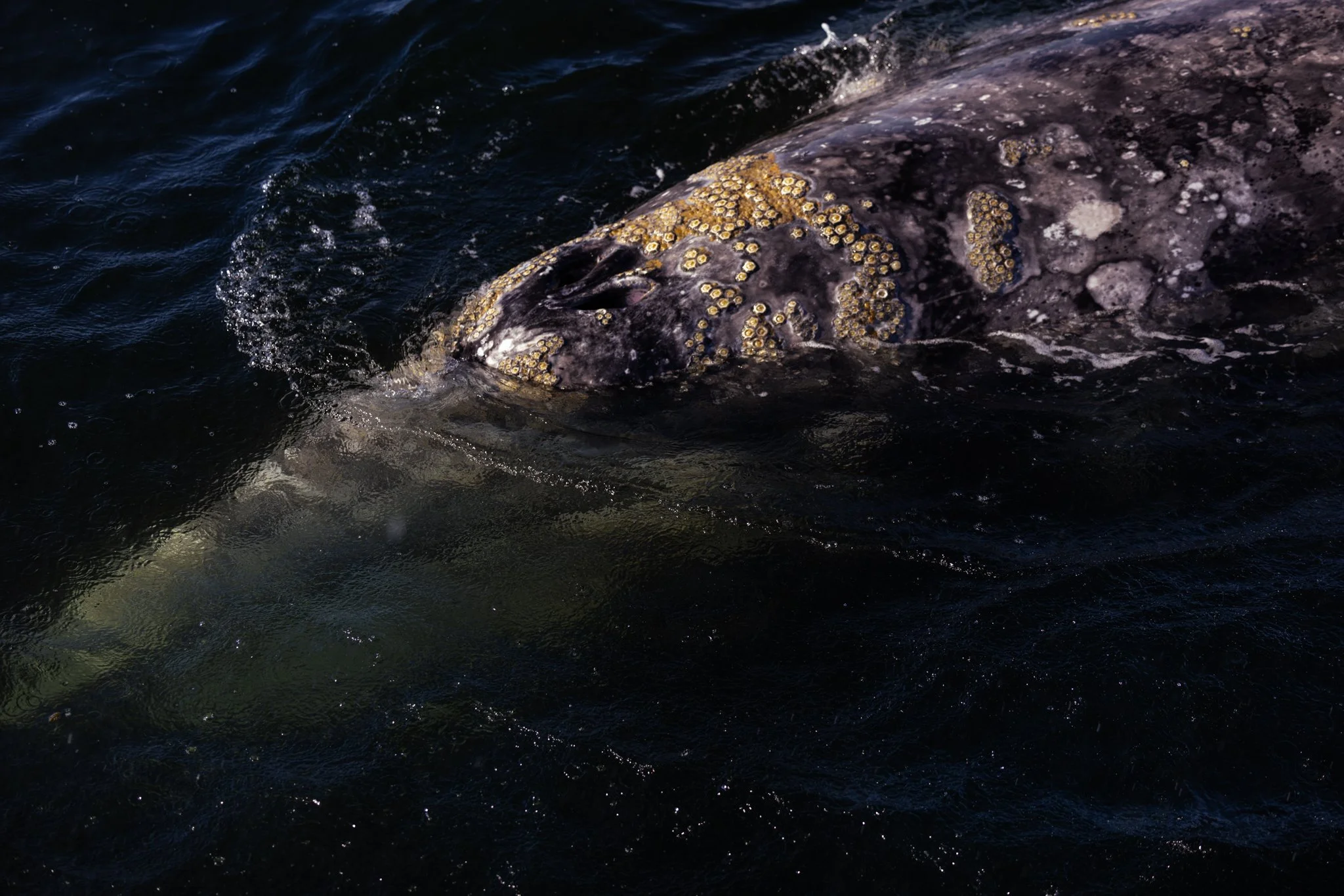
Gray Whale swims up close - so close we can see her blow hole, barnacles, and even whale lice.
On exceptional days, we may encounter dozens of gray whales in the area, sometimes with sightings of 50 or more individuals. Of course, wildlife encounters are never guaranteed, and the number of whales we see can vary significantly from day to day. That's part of what makes being on the water so exciting—the conditions, wildlife, and behavior are constantly changing.
Why Spring Is One of Our Favorite Times to Go Whale Watching in Sitka
Late March and early spring offer a unique combination of wildlife activity and relatively few visitors in town. The herring spawn brings an extraordinary concentration of marine life into Sitka Sound, while migrating gray whales and returning humpback whales add to the seasonal spectacle.
For cruise guests visiting later in the season, Sitka's spring wildlife story is still an important part of understanding why these waters are so productive. The abundance of herring is one example of the intricate relationship between Southeast Alaska's marine ecosystem and the whales, birds, sea lions, and other wildlife that depend upon it.
Early spring is one of our favorite times to be on the water—not simply because of how many whales we may see, but because of the opportunity to witness an entire ecosystem responding to one of nature's great seasonal events.